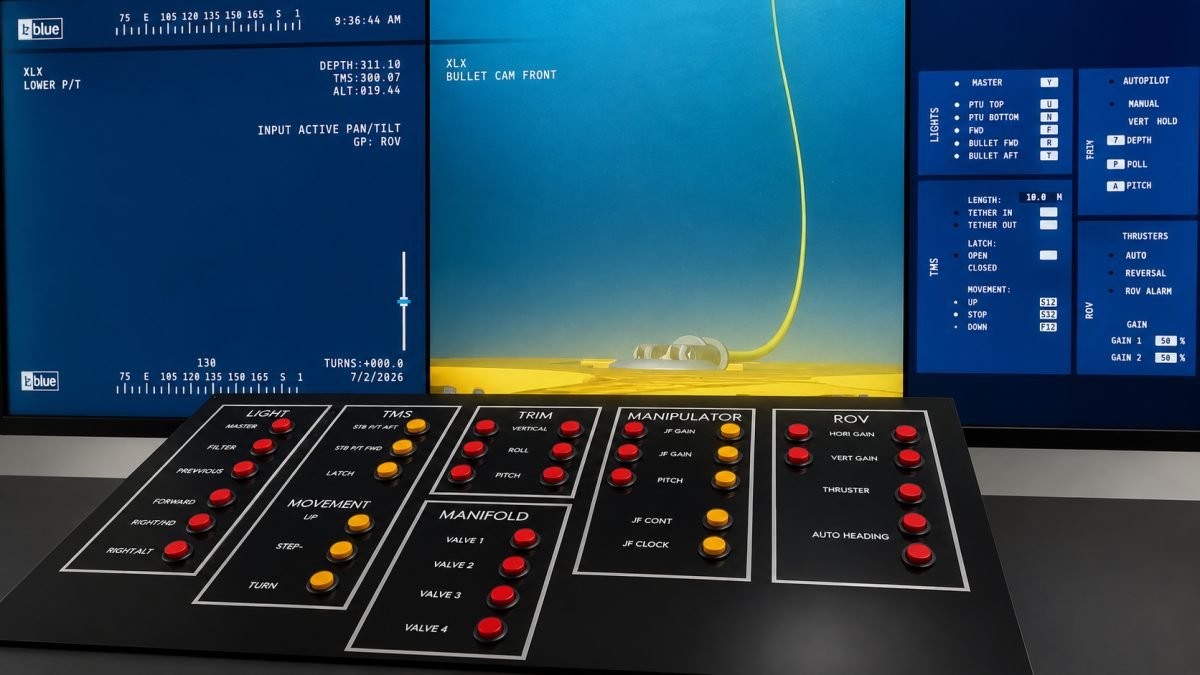
The industry-standard control console NextNusa participants use for piloting, system monitoring, and operating the ROV manipulator — introducing the same control layout and logic used offshore.
The ROV Controller is a complete control system made up of a piloting joystick, a physical button panel for support systems, and a HUD monitor that displays ROV status and telemetry in real time. Participants use this console both when training on the PaleBlue ROV Trainer and during hands-on practice with the BlueROV2.
The control layout follows industry standards, so the competency participants gain operating this console transfers directly to work-class ROV units in the field.
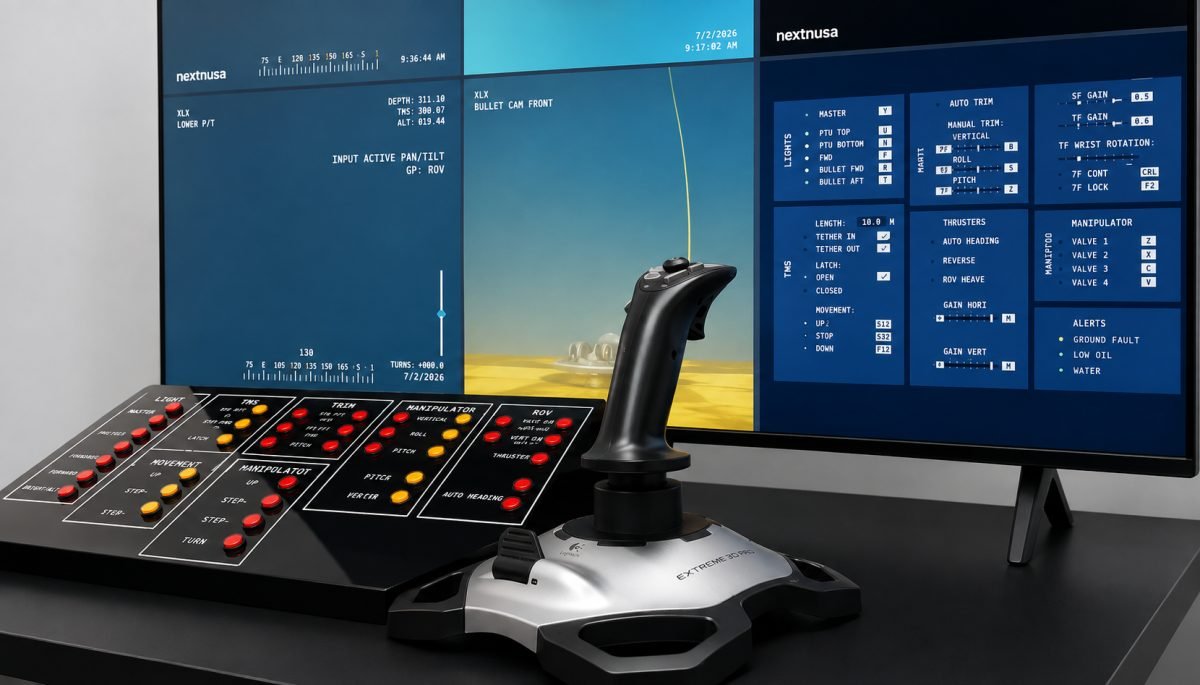
The physical control panel is divided into several functional groups, each with its own status indicator lights, so participants can monitor each system's condition while operating it.
Controls the ROV's lights (Master, PTU Top/Bottom, Forward, Bullet Fwd/Aft) according to visibility needs during piloting.
Controls the latch and the TMS's up/down movement, including open/closed status and tether movement.
Adjusts vertical trim, roll, and pitch to keep the ROV stable while maneuvering underwater.
Operates valves 1–4 on the ROV's supporting hydraulic system.
Adjusts manipulator gain and functions (JF Gain, JF Cont, JF Clock, Pitch), working in tandem with the physical manipulator controller.
Adjusts thruster gain (horizontal & vertical) and auto heading to support precise navigation.
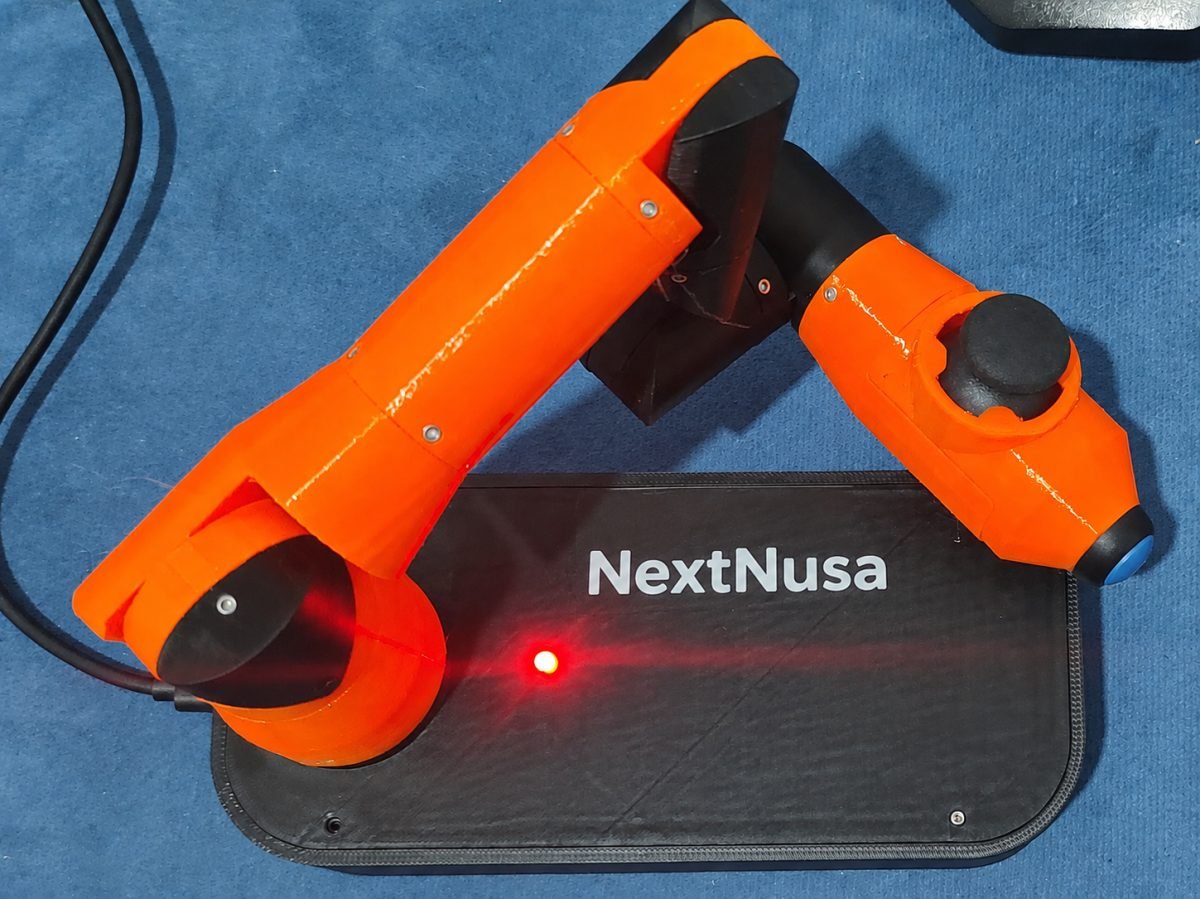
Beyond the gain panel on the main console, NextNusa uses a physical manipulator controller shaped as a jointed arm resembling the actual ROV manipulator. Participants move this control arm to directly replicate the ROV manipulator's movement — a method called 7-Function (7F), matching the "7F CONT" and "7F LOCK" indicators shown on the HUD.
This method trains participants' hand-eye coordination for tasks such as valve intervention and object handling, as covered in Module 2 (Hydraulic & Manipulator) and assessed as one aspect of the Piloting Skills rubric.
The HUD monitor displays ROV status and telemetry in real time, helping participants read system conditions before and during piloting.
Displays depth, altitude above the seabed, and TMS position in real time.
Shows a live camera feed (e.g. Bullet Cam Front) to support visual observation during piloting.
Monitors the length of tether paid out and its movement status (up/down/stop).
Displays autopilot mode (manual, vertical hold) and system alerts such as ground fault, low oil, and water.