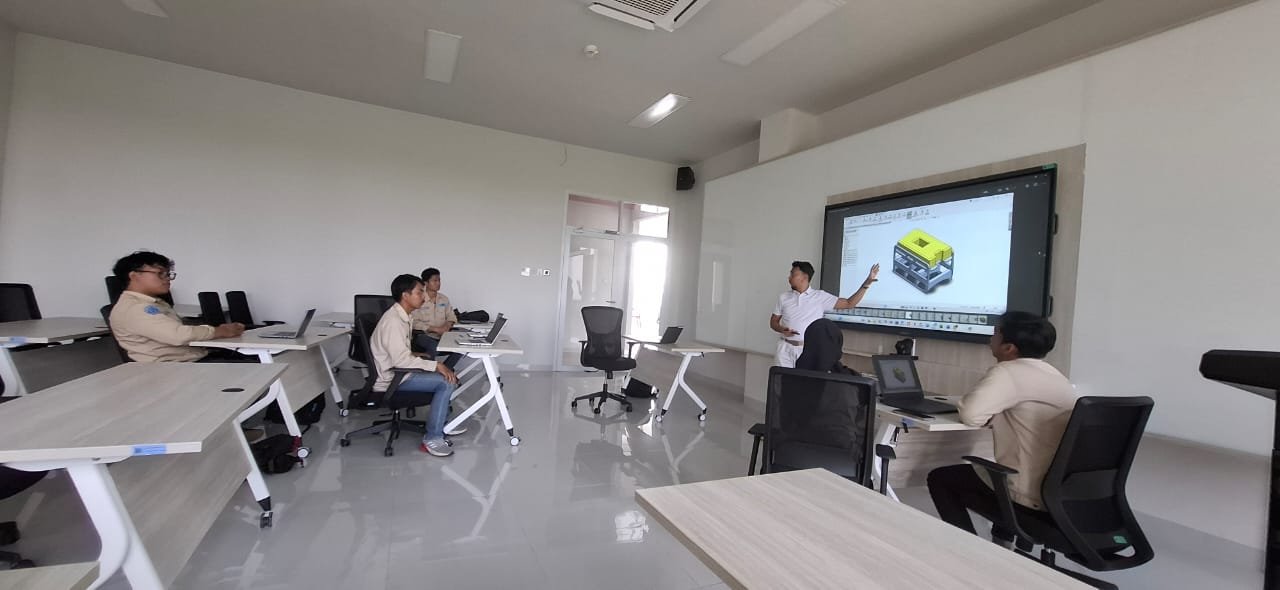
Level & Module Structure
12 modules divided into 4 progressive competency levels, from basic safety to real operational practice.
Level 1
ROV Basics & Safety
Certificate valid for life
Module 1
ROV Introduction
A comprehensive introduction to the ROV industry — types of offshore work, organizational structure, operational cycles, installation and vessel types.
Module 2
Basic Mechanical, Electrical, Hydraulic & Control Knowledge
Fundamentals of mechanical, electrical, hydraulic, and control systems that form the foundation for understanding ROV architecture.
Module 3
ROV Safety
ROV operation safety procedures, HSEQ, and emergency response.
Module 4
Communication & Personal Skills
Operational communication and teamwork in the offshore work environment.
Level 2
ROV Systems & Components
Module 5
ROV Basic Theory
ROV system architecture, ROV classification, umbilical, TMS, and LARS.
Module 6
ROV Systems
Pre-dive and post-dive checklist procedures, power up/down, PPE usage.
Module 7
Preventive Maintenance
Electrical/hydraulic isolation and preventive maintenance scheduling.
Module 8
Project Activities
ROV components as well as project and dive/mission planning.
Why Do Levels 3 & 4 Have an Expiry Date?
Level 1 & 2 certificates cover fundamental ROV knowledge that does not expire. Levels 3 & 4 are different — they certify operational competency (simulator piloting, LARS, and real field practice) that needs periodic re-verification, because ROV technology, safety procedures, and industry guidance keep evolving. Being competent today is no guarantee of still meeting current standards a few years from now without an update. That is why Level 3 & 4 certificates are valid for 4 years from the date of issue, and can be renewed through an evidence-based track — without repeating the entire program.
Learn more about the certification & renewal policy →
Level 3
ROV & LARS Operation Simulation
Certificate valid for 4 years
Module 9
ROV Simulation
6 degrees-of-freedom piloting, thruster control, navigation, and fault handling — conducted on the PaleBlue ROV Trainer, an IMCA Class-A certified simulator.
Module 10
LARS Simulation
LARS/TMS deployment and recovery, including emergency LARS procedures.
Module 11
Administration
Dive log, real-time reporting, and operational QA/QC documentation.
Level 4
Real Operational Practice
Certificate valid for 4 years
Module 12
ROV Operational Practice
3 days (24 hours) of field practice at the NextNusa pool — real launch & recovery, real ROV piloting under instructor supervision, up to a full offshore case simulation (briefing, mission execution, through to reporting).
Passing Module 12 prepares participants for the next stage: open water/offshore training under senior supervision.